How EMDR Therapy Works
If you have heard of EMDR therapy, you may have also heard it described as confusing, intense, or hard to explain. In reality, EMDR is a structured, evidence-based therapy that helps the brain process painful experiences so they no longer feel overwhelming or stuck in the present.
At its core, EMDR helps your nervous system do what it is naturally designed to do: heal.
What EMDR Is (and What It Is Not)
EMDR stands for Eye Movement Desensitization and Reprocessing. While eye movements are one part of the process, EMDR is not hypnosis, mind control, or a quick fix that forces you to relive trauma.
You stay awake, aware, and in control the entire time.
EMDR does not erase memories. Instead, it helps change how those memories are stored in the brain so they no longer trigger the same emotional and physical reactions.
Why Some Experiences Get “Stuck”
When something overwhelming or traumatic happens, the brain does not always process it fully. Instead of being filed away as something that happened in the past, the memory can stay activated in the nervous system.
That is why certain sounds, images, emotions, or situations can suddenly cause intense reactions such as anxiety, panic, shame, or emotional shutdown, even when there is no present danger.
EMDR helps the brain reprocess those experiences so they feel more distant, manageable, and integrated.
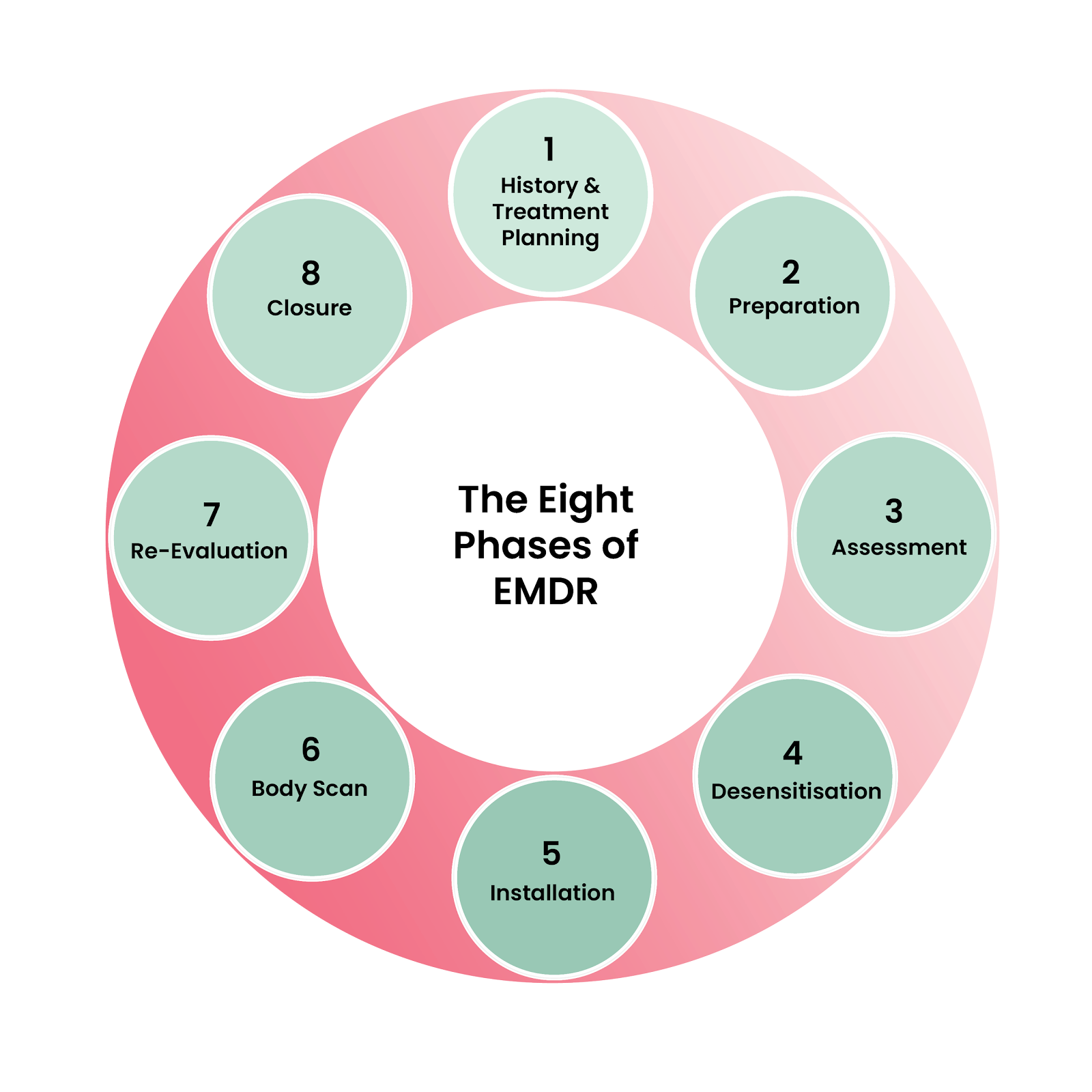
How EMDR Works, Step by Step
1. Building Safety and Trust
Before any memory work begins, your therapist focuses on creating a strong sense of safety and stability. You learn grounding tools, coping skills, and ways to regulate your nervous system.
This phase is essential. EMDR is never rushed.
2. Identifying Targets
Together, you and your therapist identify experiences that may be contributing to current struggles. These do not have to be single traumatic events. They can include patterns, beliefs, or moments that shaped how you see yourself or the world.
Examples might include feeling unsafe, not good enough, powerless, or unseen.
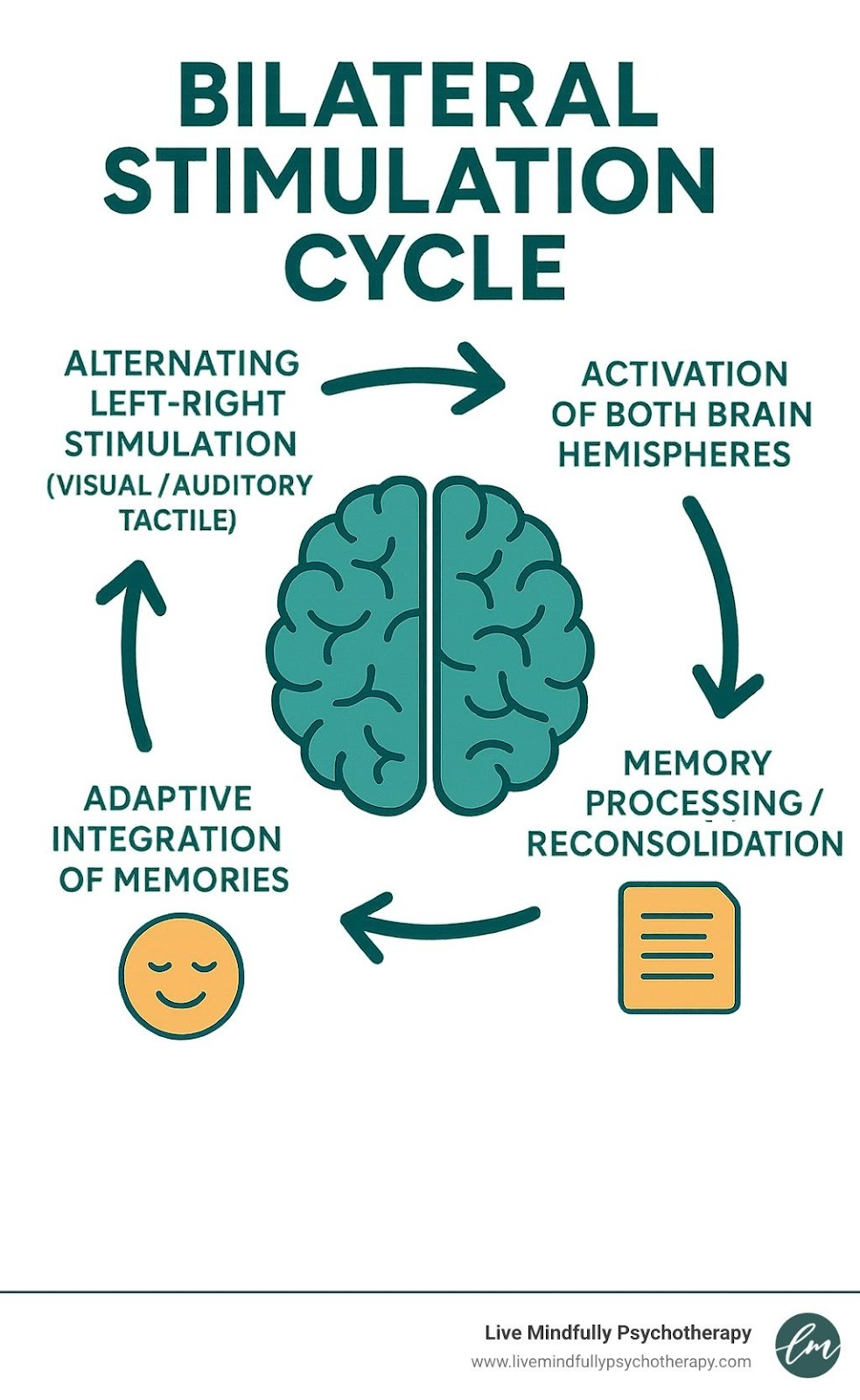
3. Bilateral Stimulation
During EMDR, your therapist uses bilateral stimulation. This often looks like guided eye movements, tapping, or alternating sounds.
While this happens, you briefly bring attention to a memory, emotion, body sensation, or belief. You are not asked to tell the story in detail or relive it over and over.
The bilateral stimulation helps the brain process the memory in a new way.
4. Letting the Brain Do the Work
This is the part many people find surprising. Instead of analyzing or talking through everything, you notice what comes up naturally.
Images, emotions, thoughts, or physical sensations may shift. The brain moves through the memory and begins to resolve it, often without forcing insight.
5. Integration and Closure
As the memory becomes less distressing, more adaptive beliefs can take hold. For example, a belief like “I am not safe” may shift toward “I survived” or “I have control now.”
Each session ends with grounding and closure to make sure you leave feeling regulated and supported.
What EMDR Can Help With
EMDR is commonly used for trauma, but it can also be helpful for:
- Anxiety and panic
- Phobias
- Childhood experiences that still feel active
- Low self-worth or negative core beliefs
- Medical trauma or birth experiences
- Grief and loss
- Emotional triggers that feel out of proportion
You do not need to have a single, obvious trauma for EMDR to be effective.
What EMDR Feels Like
People often describe EMDR as intense but manageable, and surprisingly relieving. You remain in control the entire time. You can pause, slow down, or stop whenever needed.
Many clients notice that memories feel less sharp, emotions feel less overwhelming, and their reactions in daily life begin to change without needing to force it.
A Therapy That Works With the Brain, Not Against It
EMDR is powerful because it works with the brain’s natural healing processes rather than relying only on talking or insight.
You do not need to explain everything perfectly.
You do not need to relive the past in detail.
You do not need to know exactly where to start.
Your brain already knows how to heal. EMDR helps remove what has been getting in the way.
A Final Thought
If you feel like you understand your struggles logically but still feel stuck emotionally, EMDR may be a helpful next step. It offers a path toward healing that is structured, compassionate, and deeply respectful of your nervous system.
At Thrive Creative Arts Therapy, we approach EMDR thoughtfully and collaboratively, always prioritizing safety, pacing, and your readiness.
If you are curious, we are happy to help you learn more.